Bringing Abel to Beauty Heroes has been a long time in the making.
We’ve been exploring the New Zealand-born fragrance house for years, watching as Founder Frances Shoemack and her team quietly (and persistently) challenged some of the most entrenched conventions in modern perfumery.
Abel’s premise is both incredibly simple and remarkably ambitious: create sophisticated, luxury fragrance using 100% natural ingredients and zero petrochemicals, without compromising the artistry, complexity or experience of fine perfume.
What is Abel Fragrance?
Abel Fragrance is a brand of luxury, clean perfumes created by Frances Shoemack, Master Perfumer Isaac Sinclair and biochemist Dr. Fanny Grau.
It’s an unusual combination of perspectives, founder, perfumer and scientist, and one that has allowed Abel to explore both traditional natural perfumery and new developments in biotechnology.
Abel took the limitations of natural fragrance an used them as a stepping stone toward innovation, finding new ways to create longevity, diffusion, texture and complexity without relying on conventional petrochemical fragrance ingredients.
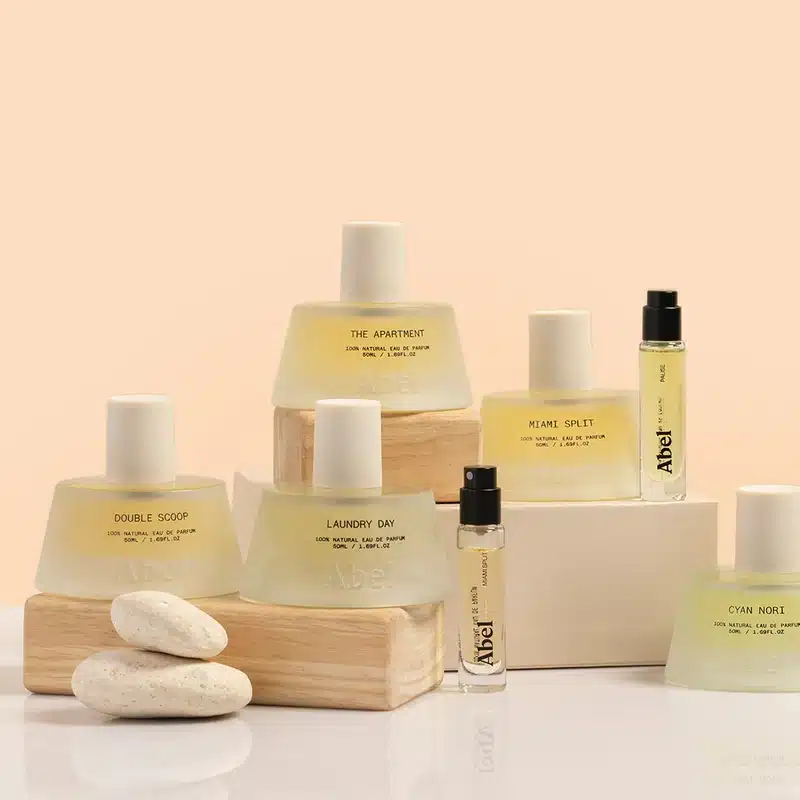
Beauty Heroes’ favorite Abel Fragrances
Abel also represents something we find especially compelling: the idea that natural fragrance does not have to mean simple, familiar or predictable.
Abel’s philosophy is rooted in pushing natural perfumery forward, working with nature, science and artistry to create fragrances that are complex, expressive and entirely their own. Without using petrochemical or synthetic fragrances, keeping the formula clean.
Philosophy matters enormously to us at Beauty Heroes, but ultimately, fragrance also has to make you feel something.
Abel does.
There is the marine, green luminosity of Cyan Nori; the soft floral warmth of Pause; and the dark, sophisticated gourmand character of The Apartment, with tart cherry, rum, cacao, white florals, balsams and vanilla.
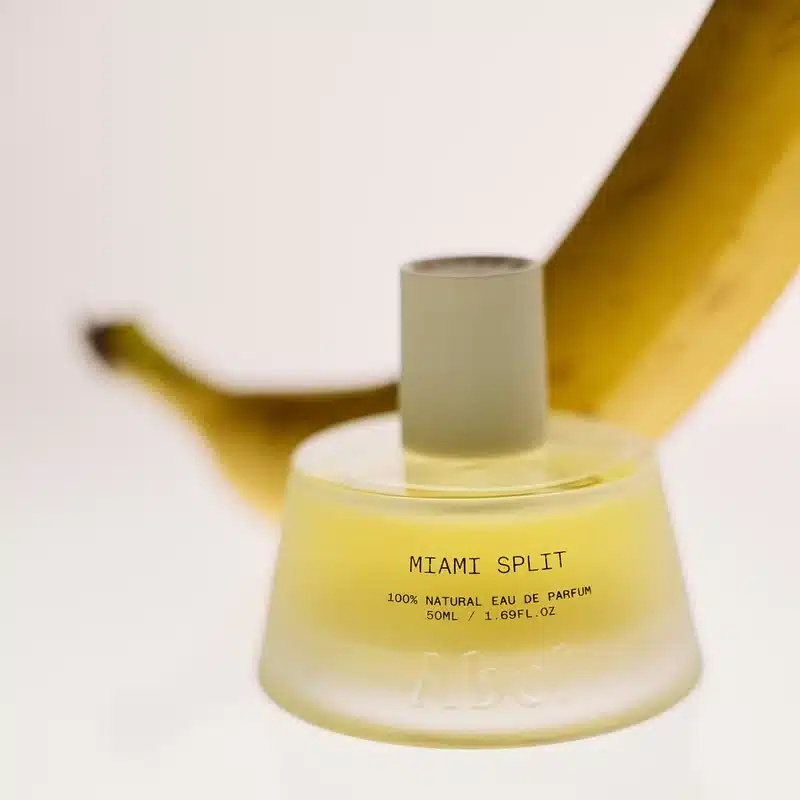
Double Scoop takes vanilla somewhere unexpected.
Instead of a traditionally sweet gourmand, it opens with aromatic rosemary and toasted black sesame, moves into a butterscotch heart, and settles into a creamy vanilla and musk base. Madagascar vanilla absolute is paired with biotech vanillin, creating a toasted, milky vanilla that feels indulgent without becoming juvenile.
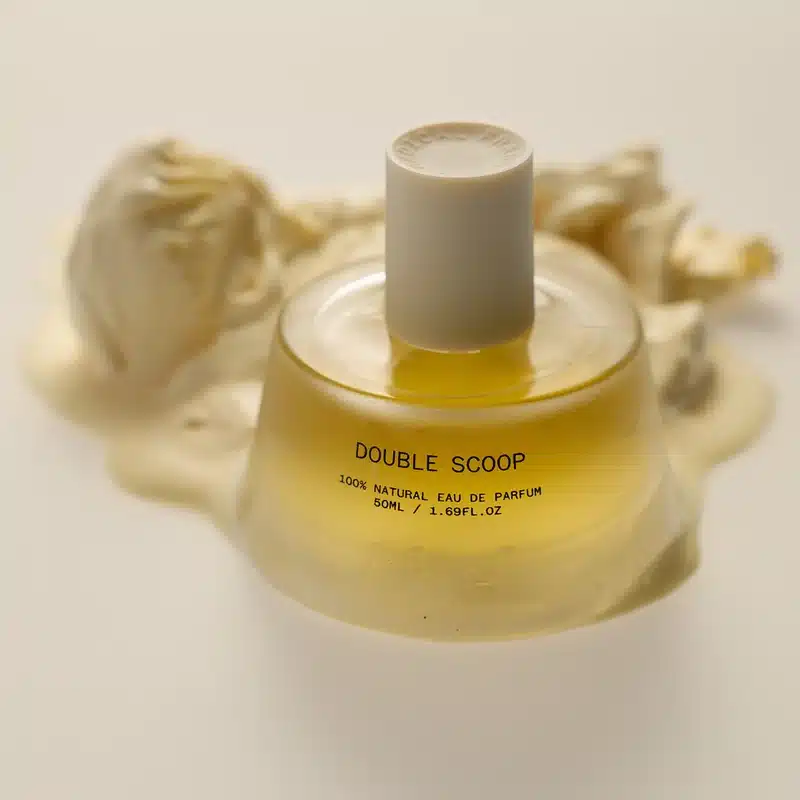
But for Beauty Heroes Founder Jeannie Jarnot, there is one Abel fragrance she favors, because it’s so unusual, and a fun surprise: Miami Split.
“Miami Split stopped me in my tracks.
The green banana and burnt caramel are playful and almost delicious at first, but then the white oud and labdanum come through and completely change the experience. It’s unusual, sexy, a little strange and totally addictive.
I own and experience a lot of fragrance, and I can honestly say I’ve never smelled anything like it.”
Jeannie Jarnot, Founder, Beauty Heroes

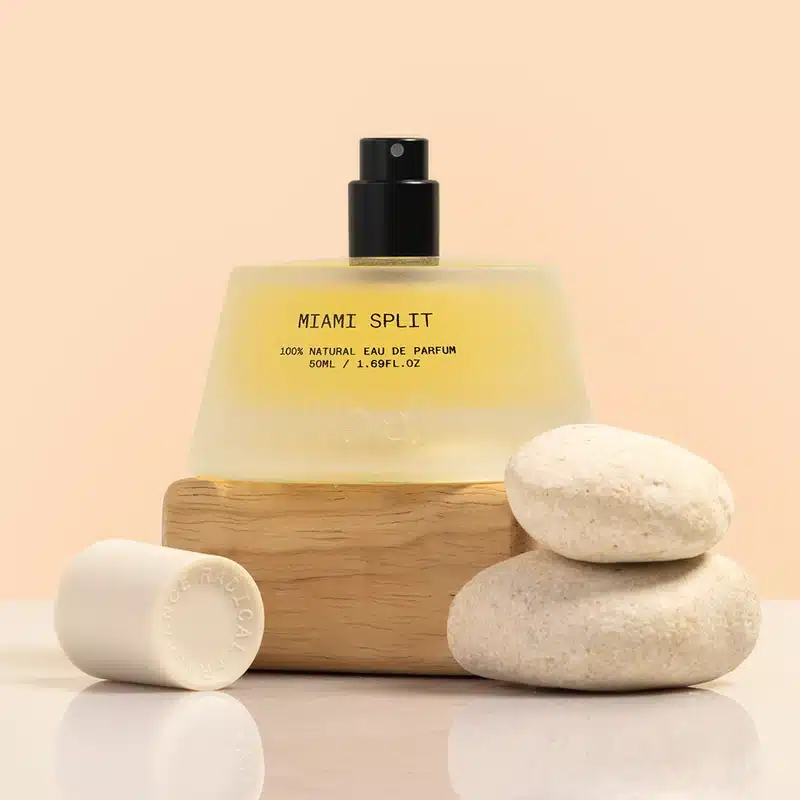
Miami Split is built around an unlikely tension: green banana and burnt caramel against white oud and three expressions of labdanum.
The green banana note is created from an upcycled material from the food industry, while the white oud gives the fragrance a lighter, more contemporary interpretation of an ingredient usually associated with deep, heavy intensity.
The result is playful and dark at once. A fragrance that almost sounds like it shouldn’t work, and somehow absolutely does.
The newest scent, Tibi feels bright and peppery at first, the scent evolves through fresh green yerba mate into earthy vetiver and warm cedarwood.

EXPLORE ABEL LUXURY NATURAL FRAGRANCE AT BEAUTY HEROES
How are Abel perfumes crafted?
Abel began with a question that still feels surprisingly radical: Why couldn’t a truly natural perfume be every bit as modern, complex and desirable as conventional luxury fragrance?
Shoemack came to fragrance from the world of winemaking, bringing with her an appreciation for natural raw materials, seasonality and the subtle variations that occur when you work with ingredients that come from the earth rather than a laboratory designed to make every batch identical.
From the beginning, she established an uncompromising boundary for Abel: 100% natural ingredients and 0% petrochemicals.
In an ingredient list, the word “fragrance” can represent a complex mixture of individual aromatic materials, and consumers are rarely given visibility into exactly what those materials are.
Abel took a different approach, choosing to disclose its fragrance ingredients and making transparency part of the brand’s philosophy.
But removing conventional synthetic fragrance materials creates technical challenges. Modern perfumers commonly have access to fixatives, stabilizers and aroma molecules that can help control everything from longevity to projection. Abel has had to solve those same problems within its own natural standard.
That challenge ultimately became a catalyst for innovation.
Working alongside Master Perfumer Isaac Sinclair and biochemist Dr. Fanny Grau, Shoemack has embraced biotechnology-derived natural aroma molecules as a way to expand the perfumer’s palette. The result is a fascinating intersection between traditional botanical perfumery and modern green science.
It also means Abel’s fragrances don’t feel like an attempt to recreate conventional perfume with a smaller toolbox. They have an identity of their own.
Meet Frances Shoemack, Founder of Abel
We asked Frances about Abel’s beginnings, the realities of formulating without petrochemicals, biotechnology, sourcing and what she wishes more people understood about the fragrance industry.

What was the very first fragrance you formulated for Abel, and what do you remember most about creating it?
It was called Vintage ’13, a nod to my winemaking background and, at the time, my idea that we could release an annual “vintage.”
I remember being so excited about the possibilities, but also very unsure about my own role as a non-perfume expert starting out in fragrance. I leaned on our Master Perfumer Isaac heavily and, as indicated by the name, took many cues from what I did know: winemaking.
It’s still a stunning fragrance (I have some squirreled away), super distinctive. But when I look at it, I’m reminded of how far we’ve come in the last 15 years since its inception.
Abel has remained committed to 100% natural fragrance. What does “100% natural” actually mean in modern perfumery, and why is that commitment still so important to you?
I think having clear guardrails is always important. The desire to create a 100% natural fragrance came from a very personal desire to wear it!
And the strict rule (100% natural, 0% petrochemical) was important to me in a world where there’s so much ambiguity. I wanted to be able to say to our customers exactly what we meant, and even more than that, we committed to sharing our ingredients lists for full transparency.
Due to old-fashioned “trade secret” laws, perfume doesn’t come with an ingredients list. Instead, scent molecules are listed under the catch-all “parfum” on a label. Normally that “parfum” is a petrochemical soup.
It’s this challenging of the status quo and proving there is another way to do things that is at the heart of who we are and how we show up.
How are you incorporating biotechnology into Abel’s fragrances while maintaining your 100% natural standard? What possibilities has biotech opened up for you as a perfumer?
In hindsight, the fact that we were so binary around 100% has been really beneficial to spearheading our innovation.
Because we were strictly 0% fossil fuel or petrochemical, we were looking for innovative solutions to problems like stability, longevity and sillage that led us to biotechnology long before others in the industry were paying any attention.
The constraints really fueled our creativity.
Which Abel fragrance has been the most challenging to formulate, and what made it so difficult to get right?
They’re all challenging in different ways, although sometimes the creative process happens with beautiful fluidity.
Most recently Miami Split was challenging, but fun! We really wanted to push the boundaries of what was possible: a pop-art banana façade on a dark, edgy white oud. It was technically challenging but also creatively invigorating.
I have to say, right up until the day we launched I was quite ready for people to tell me how much they hated it. The lovely surprise has been the response from so many (you included!) who are totally captivated by it.
Natural perfumery can be both technically challenging and expensive. What are some of the constraints you work within that someone wearing the finished fragrance would never know about?
From a technical side, not being able to rely on industry “tools” such as petrochemical fixatives—to make it last longer—or filters, stabilizers, etc. We have to work much harder without these.
From a procurement point of view, we’re also working within the realms of the gods. Seasonal variation that impacts the scent profile of key ingredients really does have a roll-on effect to the overall scent profile.
We try to strike the balance between honoring seasonal nuance and making sure our fragrance profiles are consistent for our avid customers.
Sustainability has been part of Abel from the beginning. Where does it have the biggest influence today; ingredients, formulation, sourcing, packaging, or somewhere people might not expect?
All of these are important. I think when it comes to packaging, people think more about the origin material and not enough about the end life, which is why we’ve really invested in cradle-to-cradle solutions like our compostable caps and curbside recyclable glass.
Transport is another big one.
And probably the thing most people really don’t connect the dots on is that non-natural ingredients are literally made from crude oil/fossil fuels, which are obviously non-renewable, but the extraction of which also has devastating consequences.
What is one thing you wish more people understood about fragrance and how it’s made?
That as a consumer you literally have no way of knowing whether the “sandalwood” claim on the label is real sandalwood (worth more than US$10,000/kg) or a petrochemical molecule (worth $50–$100/kg).
Spoiler alert: even on a fragrance labeled “clean,” it’s almost certainly the latter.
Discover Abel at Beauty Heroes
What ultimately drew Beauty Heroes to Abel wasn’t simply that the fragrances meet an exceptionally high standard. It was that Abel refuses to treat natural perfumery as a compromise.
Frances Shoemack, Isaac Sinclair and Dr. Fanny Grau are asking a much more interesting question: What can fragrance become when its limitations are used as a source of creativity?
The answers keep evolving.
Sometimes they smell like salt air and nori. Sometimes like cherry, rum and cacao. Sometimes like a sophisticated scoop of vanilla with toasted sesame and rosemary. And sometimes, wonderfully, they smell like green banana, burnt caramel, white oud and labdanum.
EXPLORE ABEL LUXURY NATURAL FRAGRANCE AT BEAUTY HEROES