Retinol is one of skincare’s most efficient ingredients.
The problem?
Many people aren’t using it correctly and quit after a while due to irritation and breakouts.
With the proper clean and healthy retinol treatments you can promote cell turnover and target the appearance of fine lines and improve your skin’s quality.
What Is Retinol?
Retinol is a vitamin A derivative used in skincare to promote cell turnover and target acne and wrinkles.
Once applied to the skin, it is converted into retinoic acid, the biologically active form of vitamin A that skin cells can use.
This conversion process is what makes retinol effective and much gentler than prescription-strength retinoids.
Retinol sits within a broader category called retinoids, which includes many different forms of vitamin A. These ingredients vary in strength, activity, sourcing and how many conversion steps are required before they become active within the skin.
One of the foundational distinctions is the difference between retinol, retinal, and tretinoin.
| Ingredient | Strength | Conversion Needed | Availability |
|---|---|---|---|
| Retinol | Gentle to moderate | Yes | Over-the-counter |
| Retinal (Retinaldehyde) | Stronger | Less conversion | Over-the-counter |
| Tretinoin | Most active | No conversion | Prescription |
Your skin converts retinol through the following pathway:
Retinol → Retinal → Retinoic Acid
Tretinoin is already retinoic acid, which means it acts directly on skin receptors without requiring any conversion. Because of this, tretinoin generally works faster and produces more dramatic results. However, it is also associated with a higher risk of irritation, peeling, dryness, redness, and barrier disruption, particularly during the first few months of use. Retinal requires only one conversion step to become retinoic acid, making it more potent than retinol while often remaining better tolerated than prescription tretinoin. Retinol is still a fairly strong vitamin A derivative that provides visible results with consistent use but can be a more gentle ingredient to get started with for those who want to incorporate retinol in their routine.
What Does Retinol Do Well?
Retinol has earned its reputation because it addresses multiple skin concerns simultaneously.
Consistent use can help soften the appearance of fine lines, improve rough texture, support collagen production, brighten uneven skin tone, and reduce congestion that can lead to acne and breakouts. Rather than providing an instant transformation, like from a procedure, it delivers cumulative benefits that become increasingly visible with regular use.
This gradual approach is one reason many professionals consider retinol one of the most versatile ingredients in skincare.
What Makes Tretinoin Different?
Prescription tretinoin still holds the gold standard topical retinoid for acne treatment and photoaging. Decades of clinical research support its effectiveness for stimulating collagen production, improving pigmentation concerns, reducing fine lines, and treating acne.
Tretinoin tends to produce faster and more predictable results than retinol because it acts directly on skin receptors. However, greater intensity does not always translate to a better skincare experience. Many people experience irritation, excessive dryness, peeling, redness, and increased sensitivity, particularly during the adjustment period.
Some users find themselves in a cycle of chronic inflammation that compromises the skin barrier rather than supporting long-term skin health. This is why it is very important to only use tretinoin when prescribed by a dermatologist and following their instructions carefully.
The Retinol Nuance Most People Miss
One of the biggest misconceptions surrounding retinoids is that stronger automatically means better. In reality, consistency often matters more than intensity. Many people achieve excellent long-term results using lower-strength retinol, retinaldehyde, or slower-release retinoid technologies. These approaches may produce fewer side effects while still supporting collagen production and healthy skin renewal. This is especially important for sensitive skin, rosacea-prone skin, compromised skin barriers, and perimenopausal skin, all of which may respond better to gentler vitamin A strategies.
Healthy, resilient skin is ultimately the goal, not irritation.
Retinol vs Plant-Based Vitamin A Alternatives
As clean beauty continues to evolve, many brands have introduced botanical ingredients designed to provide retinol-like benefits without the irritation often associated with traditional retinoids.
While these ingredients are not technically retinoids and do not convert into retinoic acid, they can support many of the same visible skincare goals.
- Bakuchiol
Bakuchiol is perhaps the most well-known plant-based retinol alternative.
Derived from the Psoralea corylifolia plant, it has been studied for its ability to improve the appearance of fine lines, pigmentation, firmness, and overall skin texture.
Unlike traditional retinoids, bakuchiol does not typically cause peeling or significant irritation, making it an appealing option for sensitive skin types.
- Moth bean extract
Moth bean extract is another botanical ingredient often referred to as a natural retinol alternative.
Rich in compounds that support skin renewal and elasticity, it is frequently included in clean beauty formulations that aim to provide visible anti-aging benefits without compromising the skin barrier.
- Peptilium®
Peptilium® is an advanced plant-based ingredient used in the True Botanicals Phyto-Retinol collection. Developed as a botanical alternative to retinol, it helps support collagen-rich, smoother-looking skin while remaining gentle enough for sensitive skin.
When combined with ingredients like bakuchiol and nourishing plant oils, Peptilium® allows formulators to create effective vitamin A-inspired products without many of the drawbacks associated with conventional retinoids.
How Does Retinol Work?
Retinol works by supporting the skin’s natural renewal process.
After application, retinol gradually converts into retinoic acid within the skin. This active form communicates with skin cells and encourages healthier patterns of cell turnover. As older cells are shed and newer cells emerge, your skin can appear smoother, brighter, and more refined. Retinol also supports collagen production, which helps maintain skin firmness and reduce the appearance of fine lines over time.
Because these changes occur gradually, consistent use is essential in order to reach optimal results.
What Does Retinol Do for Your Skin?
One of retinol’s greatest strengths is its ability to address multiple concerns at once.
Regular use may help:
- Smooth fine lines and wrinkles
- Improve uneven skin tone
- Refine rough texture
- Minimize the appearance of enlarged pores
- Support acne-prone skin
- Promote brighter, more radiant-looking skin
- Encourage healthier collagen production
The key is patience. Most people begin noticing visible improvements after several weeks, with more significant changes appearing over several months.
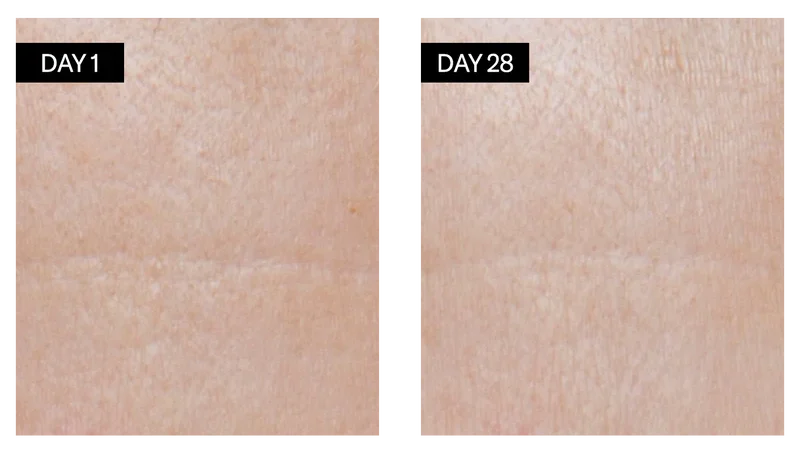
See the results after 28 days of using Odacité Retinol + Hyaluronic Acid Renewing Serum.
How to Use Retinol
Retinol should be used in your evening skincare routine. Generally, retinol is believe to be photosensitizing, so it’s best to keep it in your PM ritual. Because retinoids work on skin turnover, exposing skin to sunlight with retinol on it could be counterproductive. Nighttime application allows your skin to focus on repair and renewal while minimizing potential sensitivity.
There is no universal age requirement to start using retinol, but your mid-30s are when natural cellular turnover begins to slow enough that vitamin A products can become a valuable addition to a routine. If you are new to retinol, begin by applying it once a week, then gradually incorporate up to three times a week.
As your skin adapts, you can increase frequency based on your tolerance and product instructions, but it is generally not a product applied daily. When you’re not using retinol, try to substitute a more hydrating serum to help support your skin barrier.
Pair Retinol with Barrier-Supportive Ingredients
Retinol performs best when paired with ingredients that help maintain hydration and barrier function.
Excellent companions include:
- Ceramides
- Hyaluronic acid
- Squalane
- Peptides
- Barrier-supportive botanical oils
These ingredients help offset dryness while supporting skin resilience throughout the retinol adjustment period. Don’t forget, daily sun care is essential when using any vitamin A product. A broad-spectrum sunscreen helps protect newly renewed skin and supports the long-term results of your skincare routine.
Best Retinol and Vitamin A Products at Beauty Heroes
Beauty Heroes curates a selection of retinol products that prioritize both efficacy and skin health.
Plant-Based Vitamin A Options
True Botanicals Phyto-Retinol Advanced Clinical Cream is powered by Peptilium®, a plant-based alternative to retinol designed to support smoother, firmer, and more youthful-looking skin without the irritation often associated with traditional vitamin A.
By helping improve the appearance of elasticity, texture, and fine lines while maintaining skin comfort, Peptilium® offers a gentler approach to skin renewal.
The formula is enriched with carotenoid-rich oils and nourishing illipe butter to replenish moisture, strengthen the skin barrier, and leave the complexion feeling hydrated, plump, and resilient with continued use.
Live Botanical Solar Return Revitalizing Essence is a lightweight treatment essence that is formulated moth bean extract, a plant-based alternative to retinol, to support smoother, firmer, and more radiant-looking skin without increasing sun sensitivity.
The formula helps improve the appearance of texture and elasticity as it delivers gentle skin renewal.
It is further enhanced with niacinamide for visible brightening, plant-derived peptides from pomegranate, pea, and quinoa to support firmness, and hydrating snow mushroom, beta-glucans, and ceramides to replenish moisture and strengthen the skin barrier.
This is a nutrient-rich moisturizer that combines bakuchiol, a plant-based alternative to retinol, with glutathione and a blend of antioxidant-rich botanicals to support a brighter, firmer, and more radiant-looking complexion.
The formula is further enhanced with glutathione, black cherry extract, hyaluronic acid, and nourishing oils including borage, rosehip, jojoba, and meadowfoam to support hydration, skin resilience, and visible luminosity.
This botanical retinol is a high-performance treatment powered by bakuchiol to help improve the appearance of firmness, smoothness, and even skin tone.
The formula combines bakuchiol with innovative ingredients such as flame tree, emu apple, Tasmanian kelp, and resurrection plant extracts, alongside cacay oil, niacinamide, peptides, vegetable ceramides, and hyaluronic acid.
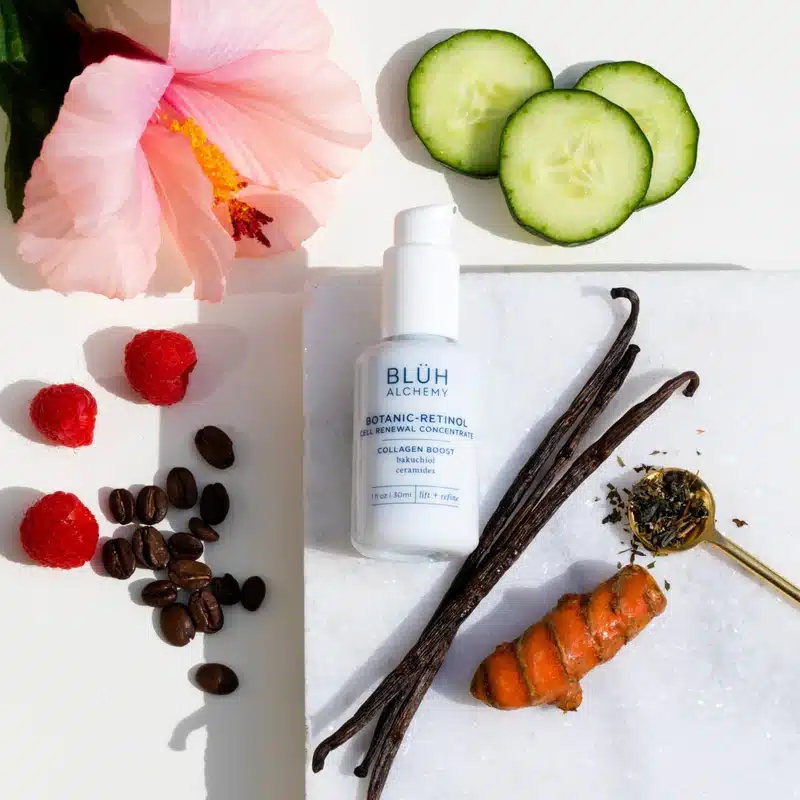
Retinol Products
Marie Veronique’s creamy retinol treatment stands out for its innovative multi-retinoid approach, combining encapsulated retinol, retinyl sunflowerseedate, and bakuchiol in a single microbiome-friendly formula.
Encapsulated retinol allows for a more controlled release, while retinyl sunflowerseedate and bakuchiol provide additional skin-renewing and antioxidant support.
The emulsion helps support natural cell turnover, improve the appearance of skin texture, and promote a smoother, more refined complexion while minimizing the discomfort often associated with stronger retinol treatments.
This oily serum is an advanced overnight treatment centered around hydrogenated retinol, a stabilized form of vitamin A that helps support skin renewal while improving the appearance of fine lines, uneven texture, and loss of firmness.
TTo complement retinol, the formula combines botanical actives such as lotus stem cells, Arctic kelp, Greek mastic, and Polish spilanthol to support skin elasticity and firmness. Squalane, jojoba oil, evening primrose oil, and sea buckthorn extract help replenish moisture and strengthen the skin barrier, reducing the dryness often associated with vitamin A products.
This a modern retinol treatment combines encapsulated retinol with deeply hydrating ingredients to support skin renewal without compromising comfort.
The encapsulation technology allows retinol to be delivered gradually to reduce the irritation often associated with traditional retinol products.
The formula also combines hyaluronic acid and squalane to help maintain hydration, support the skin barrier, and promote a plumper, smoother appearance. Bakuchiol provides additional antioxidant and skin-smoothing support, while a blend of vitamins A, B5, C, D3, and E helps nourish and strengthen the skin.
MARA’s oily treatment combines 1.2% retinol with algae extracts and natural sources of vitamin A.
To balance the activity of retinol, the formula incorporates hemp seed oil, evening primrose oil, fermented green tea, and antioxidant-rich marine extracts. T
hese ingredients help support the skin barrier, replenish moisture, and defend against environmental stressors, minimizing the dryness often associated with vitamin A treatments.

A Beauty Heroes Perspective on Retinol
Many conventional retinoid treatments prioritize maximum potency and rapid results, often relying on silicone-heavy formulas, petroleum-derived delivery systems, or combinations of multiple active ingredients designed to accelerate exfoliation.
Although results can be visible quite quickly, they may also increase the likelihood of irritation, dryness, redness, or barrier disruption, particularly for those with sensitive skin.
This is where Beauty Heroes makes a stand.
Rather than focusing solely on the strength of the retinoid itself, these formulations meet our stringent ingredient standard, and often pair vitamin A derivatives with nourishing oils, barrier-supportive ingredients, antioxidants, and calming botanicals.
The goal is to help the skin tolerate retinoid use more comfortably and support hydration and overall skin health.
Beauty Heroes also includes plant-derived vitamin A products for a more sensitive approach to retinol.
Introduce Retinol in Your Routine With Clean and Healthy Beauty
As consumers become more ingredient-conscious, formulation quality has become just as important as active ingredient strength.
Clean beauty focuses on combining vitamin A activity with barrier support, nourishing oils, calming botanicals, antioxidants, and slow-release technologies.
At Beauty Heroes, every product must meet rigorous ingredient standards before joining the collection. This commitment ensures that retinol, retinal, and plant-based vitamin A products are thoughtfully formulated with both performance and skin health in mind.
When it comes to vitamin A, long-term success rarely comes from pushing your skin to its limits. More often, it comes from finding a formula your skin can comfortably use for years to come.